
Loading...
Serving Gainesville, FL and surrounding areas. (352) 663-1786
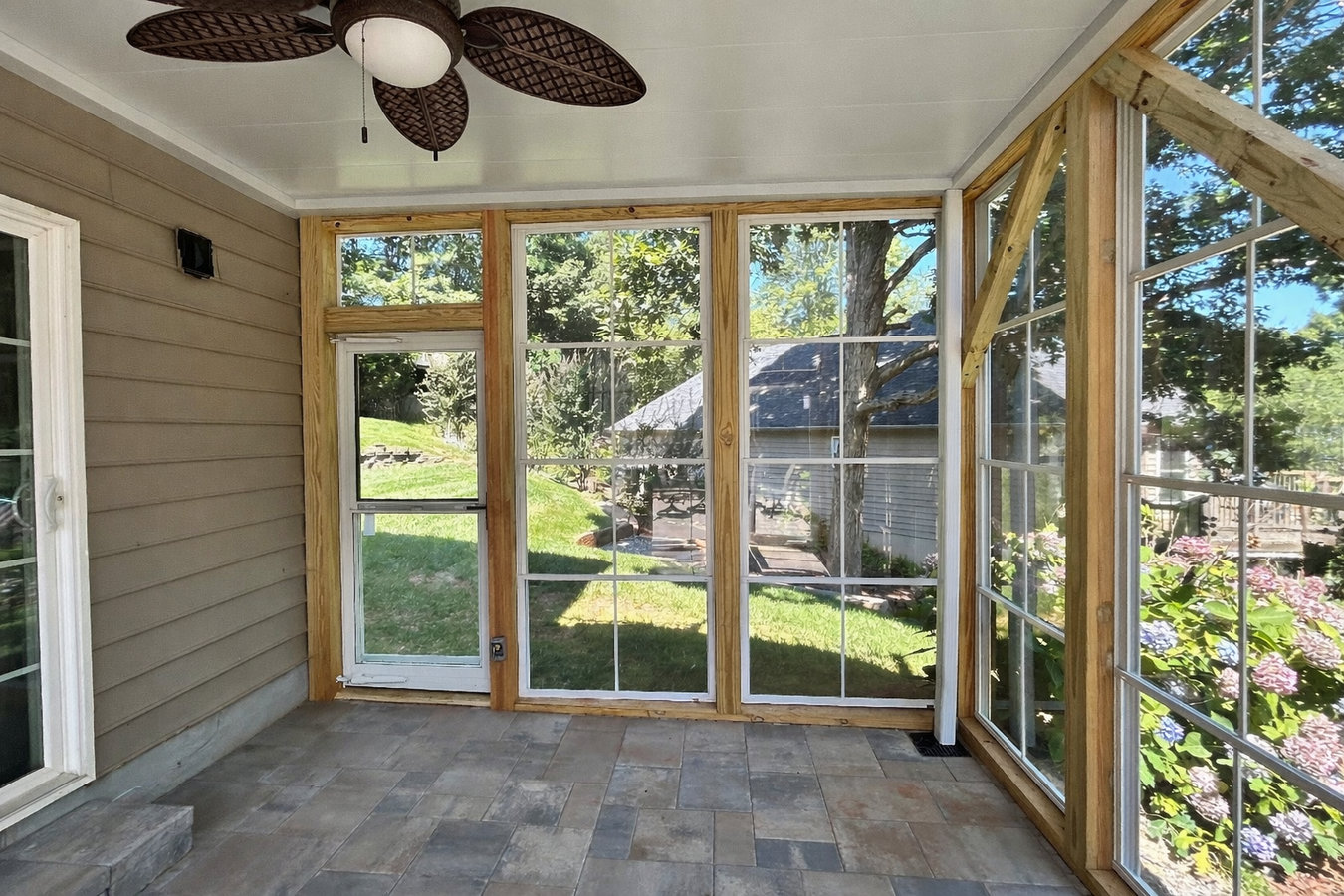
Your back porch is wasted space five months of the year. We enclose it into a fully sealed, climate-controlled room built on your existing slab - permitted through Alachua County and finished to last through Florida's heat, humidity, and storm season.
Enclosed patio rooms in Gainesville, FL convert an open outdoor patio into a permanent enclosed living area with solid walls, insulated glass or acrylic panels, and climate control - most projects run two to four weeks of active construction once Alachua County permits are approved, with a total project timeline of six to ten weeks from contract signing to a finished room.
The difference between a screen enclosure and an enclosed patio room matters a great deal in Gainesville's climate. A screen enclosure keeps bugs out but lets in heat, humidity, and rain - it is not a conditioned space. An enclosed patio room has solid walls, sealed panels, and typically connects to your home's heating and cooling system, so it stays comfortable when temperatures are in the low 90s and the humidity is through the roof. If your current screen cage or open porch is sitting empty from May through September, it is telling you exactly what the problem is.
Homeowners who want to understand the full range of options for enclosing outdoor space should also look at our solarium installation service for a glass-roof option, and our patio enclosures page for a broader overview of enclosure types. We are happy to walk through which approach fits your home during the estimate visit.
If you walk past your patio every morning thinking you would love to use that space but it is already too hot, that is the clearest sign an enclosed room would change how you live in your home. In Gainesville, an open porch is genuinely comfortable for only a few months of the year. An enclosed, air-conditioned room turns that wasted space into somewhere you actually want to be.
Gainesville's combination of warm temperatures and standing water after summer rains creates ideal conditions for mosquitoes and other insects. If you find yourself retreating inside every time you try to sit outside - or getting caught in a sudden afternoon thunderstorm - an enclosed room solves both problems at once. You get the light and the view without the bugs, the rain, or the heat.
If you already have a screen cage or Florida room with torn screens, a leaking roof, or panels that rattle in the wind, it may make more sense to replace it with a fully enclosed room than to keep patching it. An older screen enclosure built before Florida's current wind standards may not be safe to keep as-is, and the cost of repeated repairs adds up quickly.
In Gainesville's real estate market, a permitted, climate-controlled bonus room is a genuine selling point - especially for buyers moving from out of state who expect year-round indoor-outdoor living space. If your home is in a neighborhood where comparable homes have enclosed rooms and yours does not, you may be leaving real value on the table at sale time.
We build enclosed patio rooms on existing concrete slabs, pour new foundations when needed, convert screen enclosures into fully enclosed spaces, and upgrade older Florida rooms to current code. The starting point for every project is an honest assessment of your existing slab or foundation - because a room built on a failing slab will show problems within a few years. If your existing slab is sound, using it typically speeds up the project and reduces cost. For homeowners with a wood deck platform rather than a concrete slab, our patio enclosures page covers a related range of options for partially or fully enclosing outdoor space.
HVAC integration is not optional in Gainesville. A room without real climate control will be unusable from May through September, and Gainesville's summer lasts well into October most years. We design each enclosed patio room to connect to your home's existing cooling system via duct extension or - more commonly - a dedicated mini-split unit mounted on the wall. Mini-splits are efficient, quiet, and do not require you to overload your existing system. Homeowners who want a step beyond a standard enclosed room should look at our solarium installation service, which prioritizes glass-roof construction for maximum natural light.
Uses your existing concrete patio slab as the floor. Typically the fastest and most cost-effective approach when the slab is in good condition.
Pours a new concrete foundation before framing. Required when your existing slab is cracked, uneven, or not thick enough to support a permanent structure.
Replaces an existing screen enclosure with solid walls, insulated glass panels, and HVAC. Often faster than a ground-up build because the roof structure is already in place.
Converts an older Florida room or three-season porch into a fully climate-controlled, code-compliant enclosed room with updated windows and proper insulation.
Gainesville averages more than 90 days per year above 90 degrees Fahrenheit, and summer humidity regularly makes it feel even hotter. An enclosed patio room without proper insulation and air conditioning will be unusable from May through September - which is most of the year. This is why the type of glass panel you choose and how the room connects to your cooling system matters far more here than it would in a northern climate. Florida's wind-borne debris region requirements mean the windows, doors, and roof of any enclosed addition must be built to withstand significant wind loads - and those requirements are enforced through county inspections, which is genuinely good news for homeowners. Families in Hawthorne and across the county face the same code standards and climate conditions.
A significant share of Gainesville's housing stock was built between 1960 and 1990, and many of those homes have existing patio slabs that are cracked, uneven, or not thick enough to support a permanent enclosed room without repair. That is not a reason to avoid the project - it is a reason to choose a contractor who will assess your slab honestly during the estimate visit rather than discovering the issue after work begins. Homeowners in newer communities like those in Alachua typically start from a cleaner foundation but still need to account for HOA approval timelines before construction can begin.
A good contractor will schedule a visit to your home in person - not just give you a price over the phone. They will look at your existing patio slab, measure the space, ask how you plan to use the room, and talk through your options for windows, roofline, and climate control. We respond to all inquiries within 1 business day.
After the site visit, you receive a written estimate breaking down foundation work, framing, windows, roofing, and any electrical or HVAC work. A reputable contractor walks you through the estimate line by line. This is the time to ask about the permit process - permit fees should be included and the contractor should handle the application themselves.
Once you sign the contract, we submit the permit application to Alachua County's Building Inspection Division. Review typically takes one to three weeks depending on the county's current workload. We manage all the paperwork and notify you when approval comes through so construction can begin.
Foundation, framing, windows, roofing, and electrical all happen in sequence. A county inspector visits at key stages and again for the final sign-off. After the inspection passes, we walk through the finished room with you and address any punch-list items. Make sure you receive copies of all permits and inspection records before the job is officially done.
Free estimate, no obligation. We assess your existing slab, handle every permit with Alachua County, and give you a written quote that covers the full scope of the project.
(352) 663-1786Many Gainesville homes from the 1960s through 1980s have patio slabs that have cracked or settled over the years. We inspect yours during the estimate visit and tell you plainly whether it can carry a permanent enclosed room - so the price you agree to reflects the actual project, not an optimistic assumption.
We file the Alachua County permit application, manage follow-ups, and hand you a complete set of permit and inspection records when the job is done. That documentation protects your home's value and ensures the addition shows up as a legitimate asset - not a liability - when you are ready to sell.
Alachua County Building Inspection DivisionGainesville communities like Haile Plantation, Tioga, and Turkey Creek have active HOAs with design review requirements for exterior additions. We ask about your HOA situation at the first meeting and coordinate both county and HOA approvals so your project does not stall because an approval step was missed.
Gainesville receives about 50 inches of rain per year, most of it in fast summer storms. The roof-to-house connection and panel sealing are where enclosed rooms fail in Florida. We pay close attention to both - the flashing, the drainage slope, and the seal around every frame - because a room that leaks during the first summer storm is not a finished room.
Every enclosed patio room we build in Gainesville is permitted, inspected, and built to the same Florida standards that apply to the rest of your home. That combination of transparent pricing, honest slab assessment, and code-compliant construction is what separates a room you enjoy for decades from one that creates problems the first time a summer storm rolls through.
You can verify any Florida contractor's license at myfloridalicense.com through the Florida Department of Business and Professional Regulation. The National Association of Home Builders also publishes guidance on what to look for when hiring a contractor for a home addition.
Solariums maximize glass exposure on the roof and walls for homeowners who want the most natural light possible in a fully enclosed addition.
Learn MorePatio enclosures cover a range of options from screen systems to full glass installations - a good starting point if you are still deciding how much you want to enclose.
Learn MorePermit slots fill up before Gainesville's rainy season - reach out now to lock in your project timeline and avoid waiting through summer.